



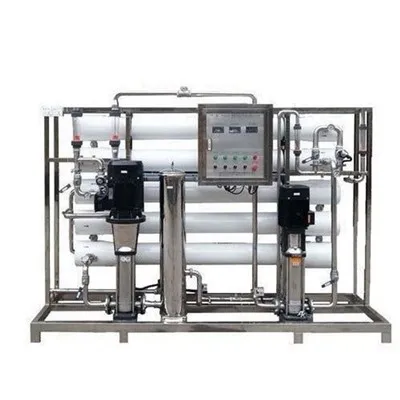
RO Plant Waste Water
Max Water Recovery Rate: 65-70%
Rejection rate: ≥ 97%
Turbidity: 3.0 NTU
Power Supply: 220V, 50Hz
Working Environment: 5ºC – 45ºC
Inlet TDS: <2000 PPM
Booster Pumps: High-Pressure Pump- Multi-Stage
The RO Plant Waste Water system revolutionizes industrial effluent management through advanced biological technology, delivering exceptional removal of BOD5, COD, and NH3-N contaminants. This integrated underground treatment plant leverages cutting-edge scientific research to ensure stable performance and effective purification without costly construction or insulation requirements. Engineered for maximum space efficiency, the RO Plant Waste Water unit occupies minimal footprint while enabling surface land reuse as green spaces or functional areas-adapting seamlessly to ground-level installation based on specific site needs.
Automated operation and low-maintenance design make this system economically viable for diverse industries. Its chemical-free biological process achieves consistent compliance while reducing operational burdens. The RO Plant Waste Water solution combines environmental stewardship with practical benefits: zero heating infrastructure, reduced energy consumption, and turnkey deployment. For enterprises prioritizing sustainable wastewater treatment without sacrificing land utility, this innovation sets a new standard in ecological and operational efficiency.

RO Plant Waste Water Produce Parameter
|
Model |
Processing Capacity |
Treatment Process |
Size (Dimension) |
Material |
Air Blower Model |
Power |
Units |
Sewage Pump Model |
Power |
Occupy Area |
|
WRO-20 |
20m3/d |
Contact oxidation |
722m |
SUS/SS |
HZ-15S |
0.105kW |
2 |
ISG15-80 |
0.18kW |
24m2 |
|
WRO-20 |
20m3/d |
MBR membrane |
6.522m |
SUS/SS |
HJB-550 |
0.55kW |
2 |
ISG20-100 |
0.55kW |
23m2 |
|
WRO-30 |
30m3/d |
Contact oxidation |
632.5m |
SUS/SS |
HZ-251S |
0.55kW |
2 |
ISG15-80 |
0.18kW |
28m2 |
|
WRO-30 |
30m3/d |
MBR membrane |
722.5m |
SUS/SS |
HZ-251S |
0.55kW |
2 |
ISG20-100 |
0.55kW |
24m2 |
|
WRO-50 |
50m3/d |
Contact oxidation |
932.5m |
SUS/SS |
HZ-40S |
0.75kW |
2 |
ISG40-100A |
0.37kW |
40m2 |
|
WRO-50 |
50m3/d |
MBR membrane |
8.532.5m |
SUS/SS |
HZ-50S |
1.5kW |
2 |
ISG25-125A |
0.55kW |
38m2 |
|
WRO-100 |
100m3/d |
Contact oxidation |
1433m |
SUS/SS |
HZ-401S |
1.5kW |
2 |
ISG40-100A |
0.37kW |
60m2 |
|
WRO-100 |
100m3/d |
MBR membrane |
10.733m |
SUS/SS |
HZ-601S |
4kW |
2 |
ISG40-100A |
0.37kW |
47m2 |
|
WRO-200 |
200m3/d |
Contact oxidation |
2633m |
SUS/SS |
HZ-501S |
2.2kW |
2 |
ISG40-100(I/A) |
0.75kW |
108m2 |
|
WRO-200 |
200m3/d |
MBR membrane |
22.533m |
SUS/SS |
HZ-1001S |
4kW |
2 |
ISG40-100(I/A) |
0.75kW |
94m2 |
Stages of waster water RO plant
The principle of integrated sewage treatment equipment is mainly to convert organic matter in sewage into harmless substances through the metabolism of microorganisms, so as to achieve the purpose of purifying water quality. This equipment usually consists of four stages: pre-treatment, biological treatment, MBR membrane (optional), and post-treatment.
1. Pre-treatment stage
This stage mainly treats sewage pre-liminarily, removes large particles of suspended solids, sediment, impurities, etc., through sedimentation, screens, screen machines, etc., to prepare for subsequent biological treatment.
2. Biological treatment stage
This is the core part of sewage treatment. Through the combination of anaerobic-anoxic-aerobic processes, the microorganisms in sewage are used to decompose organic matter to achieve nitrogen and phosphorus removal. In this process, anaerobic microorganisms first degrade organic matter, convert ammonia nitrogen in wastewater into nitrogen and oxygen, and then enter the anoxic tank for denitrification, so that the wastewater meets the discharge standard.
3. MBR membrane treatment stage
Named Membrane Bio-Reactor, MBR. The activated sludge and most of the suspended solids in the bioreactor are intercepted to achieve solid-liquid separation of purified water and activated sludge. This separation can completely separate the sludge from the effluent, making the SS (suspended solids) and turbidity of the effluent close to zero.
4. Post-treatment stage
Including disinfection treatment, which aims to remove harmful substances such as bacteria and viruses in sewage and prevent secondary pollution of water sources. Disinfection methods include chlorine disinfection, ozone disinfection, ultraviolet disinfection, etc., which kill bacteria and viruses through chemical agents or physical means to ensure that the water quality meets national standards.

Hot Tags: ro plant waste water, China ro plant waste water manufacturers, suppliers, factory, 250 LPH Industrial RO Plant, 3000 Lph Ro Plant, 1500 Lph RO Plant
Next
RO EDI PlantYou Might Also Like


Send Inquiry