



RO Membrane
Xi'an Ink-blue Environmental Protection Technology Co., Ltd. is a comprehensive supplier of water treatment equipment integrating design, production, sales, and installation. The business scope covers various industries such as drinking water production and treatment, sewage treatment, seawater desalination, medical, pharmaceutical, food, beverage, chemical, agricultural irrigation, etc. Ink-blue Environmental Protection Technology has won an excellent reputation in the water treatment industry with high-quality products and perfect pre-sales and after-sales services.

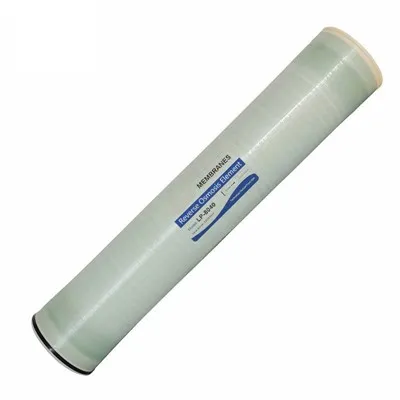


Why Choose Us
Sales Market
We sell both at home and abroad, and our foreign customers are spread across the Middle East, Africa, Asia, and Europe. We are familiar with foreign markets and help customers increase their market share.
Our Certificates
Under the strict management of IS09001 quality system, the company's products have passed a series of international standard certificates such as CE, FDA, ROHS, LFGB and so on.
Warranty and after-sales
All products provide a two-year warranty and lifetime after-sales service to help customers open the market without worries. seeking solutions to the problems and needs raised by its customers.
Team composition
We have a team of engineers who can tailor water treatment solutions for customers. On-site installation & technical guidance services are also available.
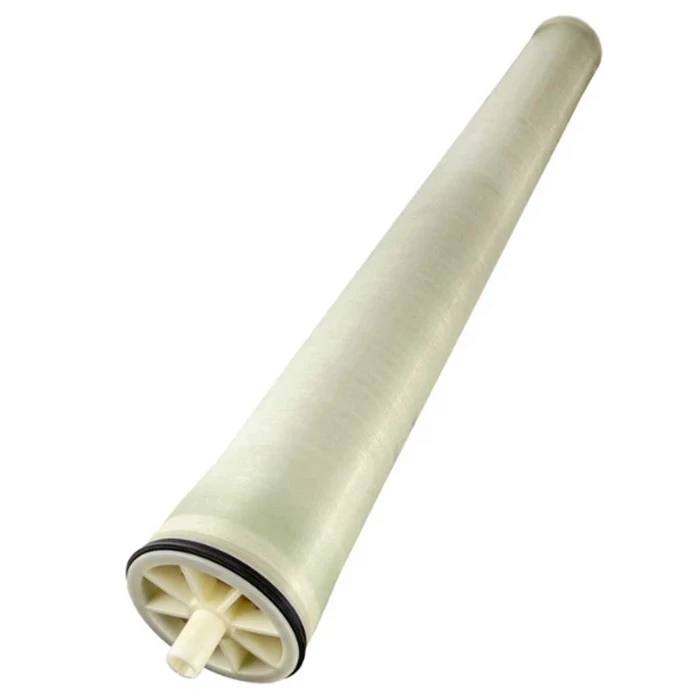
Benefits of RO Membrane
Removes Harmful Contaminants
An RO membrane can effectively eliminate up to 99% of dissolved solids, heavy metals (like lead and arsenic), bacteria, and viruses, ensuring safe drinking water.
Improves Taste and Odor
By removing chlorine, sediments, and other impurities, an RO membrane enhances the taste and odor of water, making it more refreshing.
Reduces TDS Levels
Total Dissolved Solids (TDS) impact water quality. An RO membrane lowers TDS levels, making water healthier to consume.
Eco-Friendly Solution
Using an RO membrane reduces dependency on bottled water, minimizing plastic waste and promoting sustainability.
Cost-Effective
While the initial investment in an RO system may seem high, it saves money in the long run compared to purchasing bottled water.
Types of RO Membrane
Thin-Film Composite (TFC) Membranes
Thin-film composite membranes are the most widely used and popular type of RO membranes. They consist of a thin, dense polyamide (PA) layer on top of a porous support layer. The polyamide layer is responsible for the rejection of salts and other dissolved impurities, while the support layer provides mechanical strength. TFC membranes offer high rejection rates and are known for their efficiency and durability.
Cellulose Acetate (CA) Membranes
Cellulose acetate membranes were one of the first types of RO membranes developed. They consist of a cellulose-based material, a synthetic derivative of natural cellulose found in plants, coated on a non-woven fabric. CA membranes have lower rejection rates compared to TFC membranes and are more susceptible to fouling, but they can be used in certain applications where high salt rejection is not critical.
Polyamide Thin-Film (PA-TF) Membranes
Polyamide thin-film membranes are similar to TFC membranes, but use a different type of polyamide layer. PA-TF membranes are known for their high salt rejection rates and good overall performance in RO systems.
Fully Aromatic Polyamide (FA) Membranes
Fully aromatic polyamide membranes are a type of PA-TF membrane made from fully aromatic polyamide materials. These membranes offer higher chlorine tolerance and can be used in water with higher chlorine concentrations without degradation.
Nanocomposite Membranes
Nanocomposite RO membranes incorporate nanomaterials, such as nanoparticles or nanotubes, into the polyamide layer to achieve enhanced properties and performance compared to traditional membranes. These nanomaterials can enhance membrane properties, such as salt rejection, permeability, and fouling resistance.
Spiral-Wound Membranes
Spiral-wound membranes are the most common configuration for RO membranes. They consist of flat sheets of membrane material wrapped around a permeate collection tube to form a spiral-wound structure. The spiral-wound design allows for a large membrane surface area in a compact space, making it efficient for industrial-scale RO systems.
Hollow-Fiber Membranes
Hollow-fiber RO membranes are designed as small, tubular fibers with a hollow core that resemble tiny straws. These fibers are used to create a high surface area for separation while allowing fluid to flow both inside and outside of the fibers.
Reverse Osmosis Membranes Construction


Specification of RO Membrane
|
Model |
Active Membrane Area ft2(m2) |
Stabilized Salt Rejection |
Minimum Salt Rejection |
Permeate Flow Rate GPD(m3/d) |
|
BW-4040 |
78(7.2) |
99.4 |
98.8 |
2,050(7.8) |
|
BW-6040 |
185(17.2) |
4,120(15.6) |
||
|
BW-8040 |
400(37) |
10,500(40) |
Packaging & Shipping
Packaging
1. Products are packed by shrink film. It can reduce abrasion when transport.
2. Products are packed by high quality carton, suitable for long distance ocean freight transportation as well as changing climate and with good resistance to moisture and shocks.
Delivery time
1. If this kind of products is in stock, the product will be sent for you 1-7days after payment.
2. If this kind of products is not in stock, the products will take about 7-25 days to produce.
Shipping
Maritime; Railway; Air (DHL/UPS/TNT/FEDEX)


Certifications


