

Why do you need to address excess calcium in your water immediately?
Have you ever experienced the following annoyances:
- The water temperature fluctuates in and out of your shower? And over time, your water heater's hot water capacity deteriorates, so it can only handle one person instead of two?
- A newly bought glass is covered in white, foggy marks after a week, and even dishwashing liquid won't get it clean?
- Clothes become harder and harder after washing, and your skin becomes inexplicably itchy?
The harms of high-calcium water go far beyond just being unsightly: scale can increase water heater energy consumption by 30% and shorten the lifespan of washing machines by 50%. According to the Water Quality Association, households with hard water spend an average of $200 more annually on appliance repairs. More importantly, when calcium deposits in pipes breed bacteria or adhere to skin, forming a "mineral film," you could be paying the price for your health.
Don't let calcium quietly erode your quality of life. Next, we'll break down five scientific decalcification methods to help you accurately solve your hard water problem-from temporary descaling to long-term softening, there's always a solution to suit your needs.
5 Practical Ways to Quickly Remove Calcium from Water (Sort by Effectiveness)
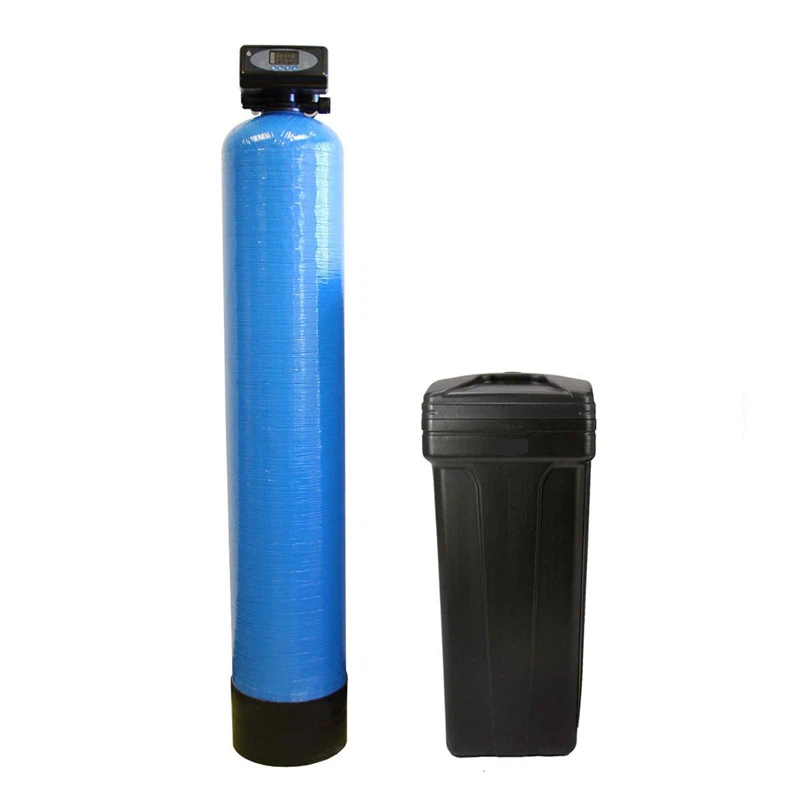
Home water softener (preferred for whole-house decalcification)
- Core Technology: Ion exchange resin replaces calcium and magnesium ions in water, converting "hard water" to "soft water" with a calcium removal rate exceeding 95%.
- Applications: Whole-house water use (bathrooms, kitchens, and laundry rooms), especially suitable for homes with high-hardness water.
- Installation Requirements: Requires installation space (approximately 80 x 50 x 30 cm) at the main water inlet pipe. A salt tank is required for regular resin regeneration.
- Core Problem Solved: "Is monthly scale removal frustrating?" Water softeners can keep water heaters, showerheads, and washing machines scale-free for life. One user reported, "I haven't cleaned my shower head for three years after installation, and the water still flows smoothly."
Reverse Osmosis Water Purifier (Best for Direct Drinking and Decalcification)
- Core Technology: 0.0001-micron precision reverse osmosis membrane physically intercepts calcium and magnesium ions, achieving a single-pass calcium removal rate of 98%.
- Applications: Kitchen drinking water, maternal and infant water
- Advantages: Produces "ultra-soft" water that is drinkable directly, making it a preferred option for families with children or those who prioritize healthy drinking water.
- Disadvantages: RO systems generate wastewater (ratios of approximately 1:1 to 3:1), and filter cartridges are expensive (annual replacement costs approximately $80-150). It is not recommended for whole-home decalcification, as water bills and wastewater treatment become a burden.
- Data Support: Ink-Blue Environmental's laboratory data shows that after filtration, water hardness is reduced from 300mg/L to below 5mg/L, meeting mineral water standards.

DIY descaling with citric acid/white vinegar (temporary emergency solution)
- Instructions:
- Mix citric acid (or white vinegar) with warm water in a ratio of 1:10.
- Soak the scale-covered area (such as an electric kettle or shower head) for 30 minutes, or up to 2 hours for stubborn scale.
- Gently scrub with a brush and rinse thoroughly.
- Limitations: This method only removes scale deposits from the device's surface, not dissolved calcium in the water. It requires weekly use.
- Suitable for: Renters and short-term residents with a budget under ¥20 (one bottle of citric acid lasts for three months).
Boiling sedimentation method (temporary treatment of small amounts of water)
- Principle: Heating water decomposes calcium bicarbonate into calcium carbonate precipitates (equation: Ca(HCO₃)₂ = CaCO₃↓ + CO₂↑ + H₂O), removing 50% of temporary hardness.
- Handling Tips: Once the water boils, remove the lid and continue boiling for 3 minutes. Let it sit for 5 minutes before using the top layer of water.
- Fatal Drawback: It does not remove permanent hardness (calcium sulfate and calcium chloride). Long-term consumption of boiled hard water still poses a risk of kidney stones.
Pre-filter (primary pre-filtration aid)
- Core Function: The 40-100 micron stainless steel filter traps rust, silt, and large calcium deposits, protecting downstream equipment such as water softeners and RO systems.
- Combination Benefit: When used with a water softener, it can extend resin life by 50%; when used with a water heater, it can reduce scale clogging by 30% (Source: China Household Electrical Appliances Association).
- Installation Recommendation: After installation at the household water meter, manually flush the filter regularly (once a month, taking 5 minutes).
In summary: If you're looking for a permanent solution, a home water softener + pre-filter combination is the preferred choice. If direct drinking water safety is paramount, an RO water purifier is essential. DIY methods are recommended only for short-term emergencies. A flexible combination based on water hardness (>200mg/L recommended with equipment) and budget is the key to truly ending calcium problems.
What are the hazards of excessive calcium in water?
Appliance Damage: Soaring Energy Consumption, Drastically Shortened Lifespan
Scale is a hidden killer for home appliances. A report by the Water Quality Association (WQA) shows that even 1mm of scale on a water heater's heating tubing can increase energy consumption by 30%, adding $150 to annual electricity bills. Scale accumulation in washing machine drums can increase wear and tear on clothing, shortening its lifespan by 50%. Data from a local after-sales service provider indicates that 70% of water heater failures are caused by calcium deposits, with repair costs far exceeding the price of a water softener.
Health Impacts: Dry Skin and Bacterial Risks Coexist
Calcium is an essential element for the human body (the WHO recommends a daily intake of 1000mg), but hard water forms a "mineral film" on the skin's surface, hindering the absorption of moisturizing ingredients and causing dryness and itchiness-a common cause of the "tight skin after showering" experienced in northern winters. A more insidious risk is that crevices in scale deposits can easily harbor E. coli. One testing agency found that the bacterial count in scale deposits in electric kettles that hadn't been cleaned for three months reached 10⁵ CFU/mL (the national drinking water limit is 100 CFU/mL).
Cost of Living: Hidden Expenses Far Exceed Reality
Households with hard water incur two additional annual expenses: ① A 50% increase in detergent usage (soap and laundry detergent must first neutralize calcium ions); ② Over $200 in appliance repairs (for water heaters, coffee makers, humidifiers, etc.). One customer's bill shows that their average annual appliance repair bill was $320 before installing a water softener. Afterward, it dropped to $80, resulting in a payback period of three years.
How to choose the right decalcification solution for you?
Step 1: Test Water Hardness – Pinpoint the Problem
First, use a TDS tester ($4-$7) to measure water hardness:
- 0-60 mg/L is soft water (no treatment required),
- 60-200 mg/L is moderately hard water (treatment required),
- >200 mg/L is severely hard water (treatment required).
Not feeling the hassle? You can schedule a visit with a professional (free service: search "local water quality testing center").

Step 2: Select a solution based on your scenario priority
- Renters/short-term residents: DIY citric acid solution + pre-filter (total cost < ¥200, solves temporary scale issues);
- Whole-home needs: Water softener + RO water purifier combination (the softener is used for domestic water, and the RO is used for drinking water, all in one place);
- Budget-limited (less than ¥1000): Single RO water purifier (prioritizes drinking water safety, with the option of adding a pre-filter for protection later).
Step 3: Calculate installation and maintenance costs
|
Equipment Type |
Product Cost |
Average annual maintenance fee |
Replacement cycle |
|
Home Water Softener |
$700-900 |
$20-50 |
Resin 5 years / Salt tank refill as needed |
|
RO Water Purifier |
$100-400 |
$10-20 |
Filter element 6-12 months |
|
Pre-Filter |
$50-100 |
$3-8 |
Filter screen 3-5 years |
How Much Calcium Does a Water Filter Remove?
|
Filter Type |
Calcium Removal Rate |
Best For |
Annual Cost |
|
Ion Exchange Water Softener |
95-99% |
Whole-house calcium removal |
$150-300 |
|
RO Reverse Osmosis System |
98-99% |
Drinking water |
$80-150 |
|
Pre-Filter |
0-10% |
Protecting downstream devices |
$20-50 |
|
Activated Carbon Filter |
5-15% |
Taste improvement |
$30-60 |
Conclusion: For whole-house calcium removal, prioritize ion exchange softeners (95%+ efficiency). For drinking water, RO systems are unmatched (98%+ removal). Pair pre-filters with both to extend lifespan and reduce maintenance costs.
FAQ – Your Calcium Removal Questions Answered
Q1: What happens if calcium levels are high in water?
A: Scale clogs pipes, reduces appliance efficiency, and causes dry skin. Citing the case study, "The cost of replacing a family's water heater due to scale exceeded the cost of installing a water softener."
Q2: Is it safe to drink water with calcium?
A: Calcium is an essential mineral (the WHO recommends a daily intake of 1000 mg, and hard water can contribute 10-20%). However, it is recommended to regularly clean the scale to prevent bacterial growth.
Q3: How to maintain a water softener?
A: Check the salt tank monthly and regenerate the resin every 3-6 months. Here's a "maintenance tip": "Keep the salt level at least 1/3 full, and regenerate based on the water hardness."
References:
Water Quality Association (WQA). (2023). Hard Water Impact on Household Appliance Maintenance Costs. WQA Technical Report.
World Health Organization (WHO). (2022). Drinking-Water Quality Guidelines: Calcium and Magnesium Recommendations. WHO Press.
China Household Electrical Appliances Association (CHEAA). (2023). Scale-Related Equipment Failure Statistics in Chinese Households. CHEAA Industry White Paper.
National Water Quality Standard of China. (2021). Water Hardness Classification and Testing Methods (GB/T 5750.4-2021).
American Water Works Association (AWWA). (2022). Comparative Analysis of Calcium Removal Efficiency by Ion Exchange vs. RO Systems. AWWA Research Journal.


