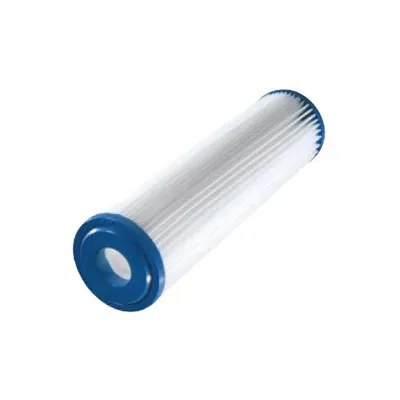
Turbidity is a critical parameter in water treatment processes, and its impact on FRP (Fibre Reinforced Plastic) filter tanks is a topic of significant importance. As a supplier of FRP filter tanks, I have witnessed firsthand how turbidity can influence the performance, longevity, and overall efficiency of these tanks. In this blog post, I will delve into the various aspects of turbidity and its effects on FRP filter tanks, drawing on my industry experience and knowledge.
Understanding Turbidity
Turbidity refers to the cloudiness or haziness of a fluid caused by large numbers of individual particles that are generally invisible to the naked eye, similar to smoke in air. These particles can include clay, silt, finely divided organic and inorganic matter, algae, soluble colored organic compounds, and other microscopic organisms. Turbidity is measured in nephelometric turbidity units (NTU) or formazin turbidity units (FTU), and it is an important indicator of water quality.
In water treatment systems, high turbidity levels can cause a range of problems. For instance, it can reduce the effectiveness of disinfection processes, as the particles can shield harmful microorganisms from disinfectants. Additionally, high turbidity can lead to the formation of deposits in pipes and equipment, which can reduce flow rates and increase energy consumption.
Impact of Turbidity on FRP Filter Tanks
Filtration Efficiency
One of the primary functions of an FRP filter tank is to remove suspended particles from water. When the turbidity of the incoming water is high, the filter media in the tank has to work harder to capture and retain these particles. This can lead to a more rapid clogging of the filter media, reducing its filtration efficiency over time. As a result, the tank may need to be backwashed more frequently to maintain optimal performance.
For example, in a water treatment plant where the influent water has a turbidity of 50 NTU, the filter media in an FRP filter tank may become clogged within a few days. On the other hand, if the turbidity is reduced to 5 NTU through pre - treatment processes, the filter media can last much longer between backwashes. This not only saves time and labor but also reduces the consumption of backwash water.
Pressure Drop
High turbidity levels can also cause an increase in the pressure drop across the FRP filter tank. As the filter media becomes clogged with particles, the resistance to water flow increases. This requires the pump to work harder to maintain the desired flow rate, which can lead to higher energy consumption and potentially damage the pump over time.
In extreme cases, a significant pressure drop can cause mechanical stress on the FRP tank itself. The tank is designed to withstand a certain range of pressures, and excessive pressure can lead to structural damage, such as cracks or leaks. Therefore, monitoring and controlling turbidity levels is crucial to prevent these issues.
Media Lifespan
The lifespan of the filter media in an FRP filter tank is directly affected by turbidity. When the turbidity is high, the filter media is subjected to a greater load of particles, which can cause it to wear out more quickly. This means that the media may need to be replaced more frequently, increasing the operating costs of the water treatment system.
For example, activated carbon or sand filter media in an FRP tank may last for several years under normal turbidity conditions. However, in a system with consistently high turbidity, the media may need to be replaced every few months.
Corrosion and Fouling
Although FRP is known for its corrosion - resistant properties, high turbidity can still contribute to fouling and corrosion - related issues in the filter tank. The suspended particles can accumulate on the inner surface of the tank, creating a favorable environment for the growth of bacteria and other microorganisms. These biofilms can cause corrosion of the FRP material over time, especially if the water contains corrosive substances such as chlorine or sulfur.
In addition, the presence of abrasive particles in high - turbidity water can cause physical wear on the inner surface of the tank, further compromising its integrity.
Mitigating the Impact of Turbidity
Pre - treatment
One of the most effective ways to mitigate the impact of turbidity on FRP filter tanks is through pre - treatment processes. These can include sedimentation, coagulation, and flocculation. Sedimentation allows the larger particles to settle out of the water before it enters the filter tank. Coagulation and flocculation involve adding chemicals to the water to cause the small particles to clump together, making them easier to remove.
By reducing the turbidity of the incoming water, pre - treatment can significantly extend the lifespan of the filter media and reduce the frequency of backwashing.
Regular Monitoring and Maintenance
Regular monitoring of turbidity levels is essential to ensure the proper operation of FRP filter tanks. By keeping track of the turbidity of the influent and effluent water, operators can detect any changes in the filtration efficiency and take appropriate action.
In addition, regular maintenance, such as backwashing and media replacement, should be carried out according to a schedule based on the turbidity levels and the performance of the tank. This can help prevent problems such as pressure drop and clogging.
Choosing the Right Filter Media
Selecting the appropriate filter media is also crucial in dealing with high - turbidity water. Different types of filter media have different filtration capabilities and resistance to clogging. For example, granular activated carbon is effective at removing organic compounds and some dissolved substances, while sand filters are better at removing larger suspended particles.
As a supplier, I offer a range of FRP filter tanks with different types of filter media to meet the specific needs of our customers. You can find more information about our products, such as the 2472 FRP Vessel, Fibre Reinforced Plastic Tanks And Vessels, and FRP Tank 10x54 on our website.


Conclusion
Turbidity has a significant impact on the performance and longevity of FRP filter tanks. High turbidity levels can reduce filtration efficiency, increase pressure drop, shorten the lifespan of the filter media, and contribute to corrosion and fouling. However, by implementing pre - treatment processes, regular monitoring and maintenance, and choosing the right filter media, these impacts can be effectively mitigated.
As a supplier of FRP filter tanks, I am committed to providing high - quality products and solutions to help our customers deal with the challenges posed by turbidity. If you are interested in learning more about our FRP filter tanks or have any questions regarding water treatment and turbidity control, please do not hesitate to contact us. We are here to assist you in finding the best solution for your specific needs.
References
- AWWA (American Water Works Association). (2017). Water Quality and Treatment: A Handbook of Community Water Supplies. McGraw - Hill Education.
- Crittenden, J. C., Trussell, R. R., Hand, D. W., Howe, K. J., & Tchobanoglous, G. (2012). MWH's Water Treatment: Principles and Design. John Wiley & Sons.
- USEPA (United States Environmental Protection Agency). (2020). Drinking Water Regulations and Health Advisories. Retrieved from https://www.epa.gov/dwreginfo