Water conductivity is a crucial parameter that reflects the ability of water to conduct an electric current, which is mainly determined by the concentration of ions present in the water. As a leading supplier of SS Housing Filter, I've witnessed firsthand how this remarkable filtration technology can significantly influence the conductivity of water. In this blog, I'll delve into the science behind the SS Housing Filter and explain how it impacts water conductivity.
Understanding Water Conductivity
Before discussing the impact of the SS Housing Filter on water conductivity, it's essential to understand what water conductivity is and what factors affect it. Conductivity in water is a measure of the water's ability to conduct an electric current. This ability is directly related to the presence of ions in the water. Ions are charged particles, such as sodium (Na+), chloride (Cl-), calcium (Ca2+), and magnesium (Mg2+), which are dissolved in the water. The more ions present in the water, the higher its conductivity.
The sources of these ions can vary widely. Natural sources include the dissolution of minerals from rocks and soil as water passes through the ground. Industrial activities, such as mining and manufacturing, can also introduce large amounts of ions into water bodies. Domestic sewage and agricultural runoff can contribute additional ions from fertilizers and detergents.
How SS Housing Filter Works
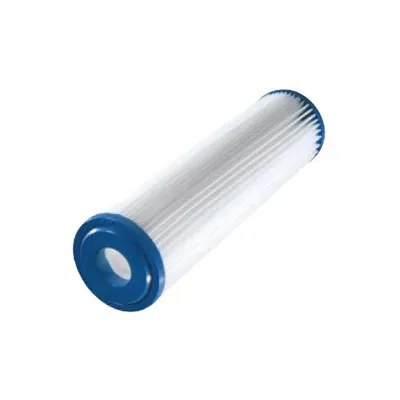
The SS Housing Filter is a type of cartridge filter housing made of stainless steel. It is designed to hold one or more filter cartridges, which are the actual filtration media. The stainless - steel housing provides a robust and corrosion - resistant enclosure for the filter cartridges, ensuring long - term durability and reliable performance.
When water enters the SS Housing Filter, it first passes through the pre - filter layer of the cartridge. This layer is designed to remove larger particles, such as sediment, sand, and rust. As the water continues to flow through the cartridge, it encounters the finer filtration layers. These layers are capable of removing smaller particles, including colloids and some microorganisms.
In addition to physical filtration, some filter cartridges used in SS Housing Filters are also designed for chemical filtration. For example, activated carbon cartridges can adsorb organic compounds, chlorine, and some heavy metals from the water. Ion - exchange cartridges can replace certain ions in the water with other ions, effectively reducing the concentration of specific ions.
Impact on Water Conductivity
The SS Housing Filter can have a significant impact on water conductivity through several mechanisms:
Physical Filtration
By removing larger particles and colloids, the SS Housing Filter indirectly affects water conductivity. Although these larger particles themselves do not contribute significantly to conductivity, they can carry adsorbed ions. When these particles are removed, the associated ions are also removed from the water, resulting in a slight decrease in conductivity.
Chemical Filtration
Activated carbon cartridges in the SS Housing Filter can adsorb organic compounds and chlorine. While these substances do not directly contribute to conductivity, their removal can have an impact on the overall chemical balance of the water. Chlorine, for example, can react with other substances in the water to form ions. By removing chlorine, the SS Housing Filter can prevent the formation of these additional ions, thereby reducing conductivity.
Ion - exchange cartridges are perhaps the most direct way the SS Housing Filter affects water conductivity. These cartridges work by exchanging ions in the water. For example, a common ion - exchange process is the removal of calcium and magnesium ions (which cause water hardness) and their replacement with sodium ions. Since the number of ions in the water remains relatively constant during this process, the change in conductivity is mainly due to the difference in the ionic mobility of the exchanged ions. In general, sodium ions have a higher ionic mobility than calcium and magnesium ions, so the conductivity may change slightly depending on the initial ion concentrations.
Removal of Heavy Metals
Some heavy metals, such as lead, mercury, and copper, are present in water as ions. The SS Housing Filter, especially when equipped with appropriate filter cartridges, can remove these heavy - metal ions. Since heavy - metal ions contribute to water conductivity, their removal leads to a decrease in the overall conductivity of the water.


Comparing with Other Filter Housings
When compared to other filter housings, such as Plastic Bag Filter Housing, the SS Housing Filter has several advantages in terms of its impact on water conductivity.
Plastic bag filter housings are typically used for more basic filtration applications. They are mainly designed to remove large particles and are not as effective at removing smaller particles and ions as SS Housing Filters. The plastic material may also leach some substances into the water over time, which could potentially increase the water's conductivity.
On the other hand, 20 Cartridge Filter Housing is a larger - scale version of the cartridge filter housing. It can hold more filter cartridges, allowing for higher flow rates and more comprehensive filtration. However, like the SS Housing Filter, its impact on water conductivity depends on the type of filter cartridges used.
Real - World Applications
The ability of the SS Housing Filter to affect water conductivity has numerous real - world applications. In the pharmaceutical industry, where water of extremely low conductivity is required for drug manufacturing, SS Housing Filters are used to remove ions and other contaminants from the water supply. This ensures the quality and purity of the final pharmaceutical products.
In the electronics industry, water with low conductivity is essential for cleaning electronic components. The SS Housing Filter helps to achieve the required water quality by reducing the ion concentration, preventing electrical short - circuits and other issues caused by conductive water.
In the food and beverage industry, the SS Housing Filter is used to improve the quality of water used in production. By reducing the conductivity and removing contaminants, it helps to enhance the taste and shelf - life of the products.
Contact for Purchase and洽谈
If you are interested in learning more about how our SS Housing Filter can improve the quality of your water and affect its conductivity, we encourage you to reach out to us. Our team of experts is ready to provide you with detailed product information, technical support, and customized solutions based on your specific needs. Whether you are in a small - scale business or a large - scale industrial operation, our SS Housing Filter can be a reliable choice for your water filtration requirements.
References
- AWWA (American Water Works Association). Water Quality and Treatment: A Handbook of Community Water Supplies. McGraw - Hill, 2017.
- Crittenden, J. C., et al. Water Treatment: Principles and Design. John Wiley & Sons, 2012.
- USEPA (United States Environmental Protection Agency). Drinking Water Standards and Health Advisories. EPA, 2023.